Posts

Showing posts with the label children

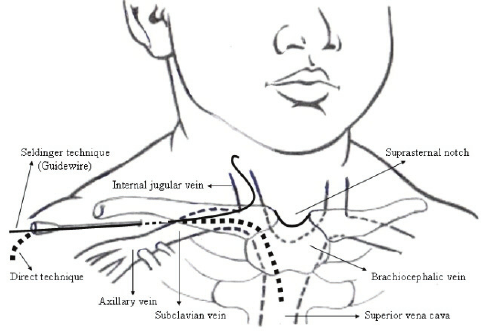
Cautionary notes specific to pediatric central venous catheterization
Image
Caution during puncture Ultrasound-guided techniques are recommended for children with small veins that are difficult to puncture. Select a thinner, lighter probe than for adults. A linear probe or hockey-stick probe can be used. Recommended catheters

Starting an intravenous access to Pediatric Patients

Image
Start reading here:  50+ IV Therapy Tips and Tricks: How to Hit the Vein in One Shot Starting an IV to a pediatric patient is extra challenging as their veins are smaller and are sometimes distressed when they see a needle. Hopefully, these IV tips for pediatric patients can help you:

Why you should avoid the use of aspirin in children.

Image
          The general recommendation to use aspirin in children was withdrawn because of Reye syndrome, with use of aspirin only recommended in  Kawasaki disease .    Reye syndrome is a rapidly progressive encephalopathy.  

Fever in Children. Italian Pediatric Society Guidelines 2016. 17-32.

Image
                       --  Back to reading recommendations  1 -16  -- Recommendation 17:  Oral administration of paracetamol is preferable to rectal administration in children, because absorption is more constant and it is possible to achieve a more precise dosage based on body weight (evidence level I; strength of recommendation A). 

Fever in Children. Italian Pediatric Society Guidelines 2016. 1-16.

Image
Recommendation 1 : Rectal measurement should not be used routinely in children aged < 5 years because it is invasive and causes discomfort (evidence level III; strength of recommendation D). 

Pediatric Sedatives/Anesthetic Dosages

Image
Stay tuned! Sign up with Facebook!

General Anesthesia in Young Children Not Associated with Significant Neurological Impairments, Study Suggests

Image
CHICAGO – Children who are exposed to general anesthesia from birth to age 2 have developmental testing results in kindergarten that are similar to those of children who have not been exposed, according to a new study published in the October issue of  Anesthesiology , the official medical journal of the  American Society of Anesthesiologists  (ASA).