Posts

Showing posts with the label INFECTION

Surgical Site Infection Reduction

Image
  Surgical Site Infection Reduction To help reduce surgical site infections , cardiac surgery (CS) programs should include a care bundle that includes topical intranasal therapies, depilation protocols, and appropriate timing and stewardship of perioperative prophylactic antibiotics, combined with smoking cessation, adequate glycemic control, and promotion of postoperative normothermia during recovery. Moderate-quality meta-analysis have concluded that care bundles of 3 to 5 evidence-based interventions can reduce surgical site infections . This topic has been reviewed extensively with class of recommendation and level of evidence in an expert consensus review by Lazar et al. Evidence supports topical intranasal therapies to eradicate staphylococcal colonization in patients undergoing CS. From 18% to 30% of all patients undergoing surgery are carriers of  Staphylococcus aureus , and they have 3 times the risk of  S. aureus  surgical site infections and bact...

Choosing the Appropriate Antibiotic

CHOOSING ANTIBIOTICS There are some general guidelines that can be used in determining the appropriate antibiotic. Penicillins act against gram- positive and

Infection Control during Anaesthetic Procedures

Image
The risk of infection is dependent on the procedure and the level of barrier protection. Guidelines for monitoring have been published by the Association of Anaesthetists and should be followed at all times.

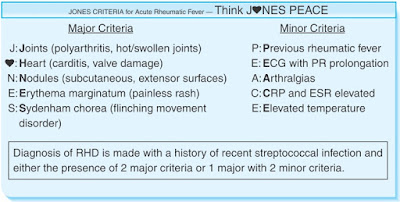
Jones Criteria Mnemonic: Easy Guide to Diagnose Rheumatic Fever

Image
Jones Criteria Mnemonic: Easy Guide to Diagnose Rheumatic Fever Tags : Jones Criteria, rheumatic fever, medical mnemonic, diagnosis guide The Jones Criteria are essential for diagnosing rheumatic fever, a serious condition linked to untreated strep throat. This easy JONES mnemonic helps medical students and doctors recall the five major signs of rheumatic fever quickly and accurately. Whether you’re studying for exams or working in clinical practice, this guide breaks it down for you!

Elements of Care in Sepsis and Septic Shock: Recommendations Adapted from International Consensus Guidelines

Image
Resuscitation Sepsis and septic shock constitute an emergency, and treatment should begin right away.

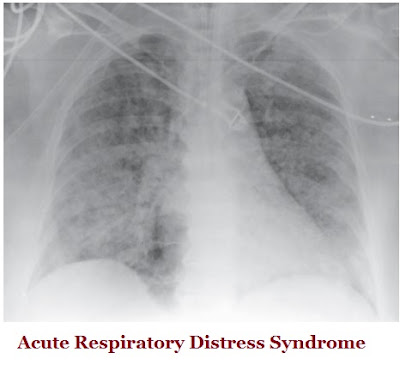
DIAGNOSTIC CRITERIA AND CLINIC SIGNS OF ARDS

Image
     Acute respiratory distress syndrome (ARDS) is a clinical syndrome  of severe dyspnea of rapid onset, hypoxemia, and diffuse pulmonary  infiltrates leading to respiratory failure. Assosiated disorders and causes:

Cephalosporin antibiotics, classification and using.

Image
Cephalosporin Antibiotics Classification keywords:cephalosporins, beta-lactam antibiotics, antibiotic classification, MRSA treatment, gram-positive bacteria, gram-negative bacteria, skin infections, respiratory infections, ceftriaxone, cefazolin Cephalosporin antibiotics are the largest and most diverse group of beta-lactam antibiotics. They are classified into five generations, with some cephalosporins not assigned to a specific generation.

INFECTION PREVENTION AND CONTROL INSTRUMENTS FOR TRACHEAL INTUBATION

Image
STATEMENT ON STANDARD PRACTICE FOR INFECTION PREVENTION AND CONTROL INSTRUMENTS FOR TRACHEAL INTUBATION  Committee of Origin: Committee on Quality Management and Departmental Administration (QMDA(Approved by the ASA House of Delegates on October 20, 2010, and last amended  on October 28, 2015)  Statement : All instruments used for intubation of the trachea (endotracheal tubes, laryngeal mask airways (LMAs), laryngoscopes, fiberoptic devices, stylets, forceps, or other airway devices) should be properly cleaned using standard methods for decontamination and high-level disinfection between each patient use and stored in a clean environment. Sterility is not required . Prepackaged endotracheal tubes can be opened, cuffs checked for any leaks, stylets placed for future use, cuff syringes attached, and placed back into the package. Data suggest that storage and subsequent use of such prepared endotracheal tubes is reasonable for up to 48 hours.   Rationa...

Infective Endocarditis Prophylaxis for Gastrointestinal Procedures

Image
It is indicated in cases of heart valve lesions (mainly stenotic), prosthetic  valve or previous endocarditis: Amoxycillin 1g plus gentamicin, 120 mg IV at induction, then amoxicillin 500 mg, orally 6 hours later. If urine infected, prophylaxis should cover causative organism. If allergic to penicillin, or have received more than one dose of penicillin in preceding month: Vancomycin 1g IV over 100 minutes plus gentamicin 120 mg IV at induction, or Teicoplanin 400 mg IV plus gentamicin 120 mg IV at induction.