Taking into account historical criteria and additional consultations with European and North American surgeons with experience from clinical trials and event adjudication the Subcommittee on Control of Anticoagulation has approved the following recommendation for definition of major bleeding in surgical studies.
Guidelines from the European Society of Anaesthesiology: Fibrinogen concentration of less than 1.5 to 2 g l −1 is considered as hypofibrinogenaemia in acquired coagulopathy and is associated with increased bleeding risk. C
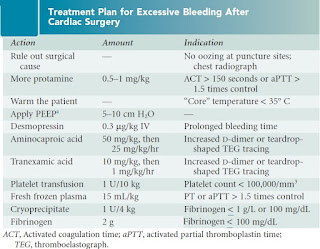
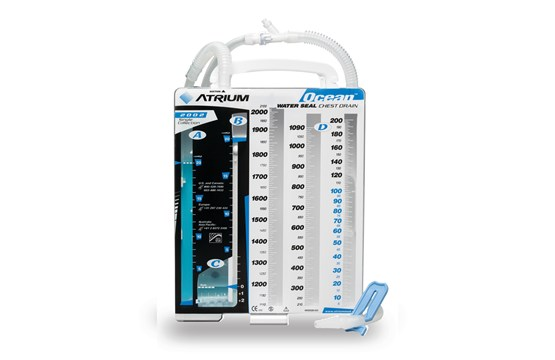
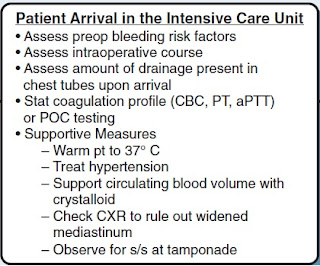
Surgical reexploration in case of excessive bleeding. Criteria: 8 mL/kg in any 2 successive hours or 20 mL/kg in the first 4 postop hours with or without s/s at cardiac tamponade
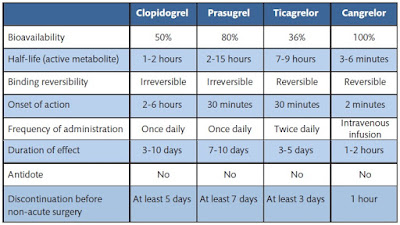
Dual antiplatelet therapy (DAPT) with ASA and P2Y12-receptor inhibitors (clopidogrel, ticagrelor and prasugrel) (Table) reduces the risk for thrombotic complications in patients with acute coronary syndrome (ACS) compared to treatment with ASA only, especially if they undergo percutaneous coronary intervention. The risk for thrombotic
Acetylsalicylic acid (ASA) is one of the cornerstones for the treatment of acute and chronic cardiovascular disease. Secondary prevention with ASA has been shown to reduce mortality, MI and cerebrovascular events in different subsets of patients with occlusive cardiovascular disease, but also to increase the risk for bleeding complications. Discontinuation before surgery. A meta-analysis of 13 trials with 2399 patients who had CABG that compared administration of ASA preoperatively versus no treatment or treatment with a placebo showed that treatment with ASA reduced the risk for perioperative MI [(odds ratio (OR) 0.56; 95% confidence interval (CI) 0.33–0.96] but did not reduce the mortality rate (OR 1.16; 95% CI 0.42–3.22). Postoperative bleeding, red cell transfusions and surgical re-exploration were increased with ASA. However, the included studies were of low methodological quality. A recent large randomized controlled trial (RCT) compared the...
Preoperative: Anemia: consider iron, folate, erythropoietin; Anticoagulation: Early withdrawal of antiplatelet agents and warfarin. Switch to unfractionated heparin if necessary;
A score of ≥2 is associated with a favorable benefit / risk ratio for prolonged DAPT while a score of < 2 is associated with an unfavorable benefit / risk ratio. CHF indicates congestive heart failure; DAPT, dual antiplatelet therapy; LVEF, left ventricular ejection fraction; MI, myocardial infarction; and PCI, percutaneous coronary intervention. Reference Levine GN, Bittl JA, Brindis RG, et al. 2016 ACC/AHA Guideline Focused Update on Duration of Dual Antiplatelet Therapy in Patients With Coronary Artery Disease. J Am Coll Cardiol 2016; doi=10.1016/j.jacc.2016.03.513.
Some Bleeding Risk Seen With Xarelto Vs. Pradaxa By Steven Reinberg HealthDay Reporter MONDAY, Oct. 3, 2016 (HealthDay News) -- The blood thinner Xarelto may pose a slightly greater risk of serious bleeding than Pradaxa in patients with the abnormal heartbeat known as atrial fibrillation , new research suggests. Most patients with the condition take a blood thinner to reduce the risk of stroke . Although these drugs help prevent stroke, they can also cause uncontrollable bleeding, which can be fatal, the researchers said. Two newer drugs -- Xarelto (rivaroxaban) and Pradaxa (dabigatran) -- are replacing the older drug warfarin, a medication that is notoriously difficult to monitor. Which of these newer drugs is safer, however, hasn't been proven, said the U.S. Food and Drug Administration researchers behind the new study. "There are now several new oral anticoagulants and we don't have a lot of studies that compare one...
Activated clotting time ( ACT ), also known as activated coagulation time is a test of coagulation . [ 1] The ACT test can be used to monitor anticoagulation effects, such as high-dose heparin before, during, and shortly after procedures that require intense anticoagulant administration, such as cardiac bypass , cardiac angioplasty , thrombolysis , extra-corporeal membrane oxygenation (ECMO) and continuous dialysis . [ 1] It measures the seconds needed for whole blood to clot upon exposure to an activator of an intrinsic pathway by the addition of factor XII activators. It is ordered in situations where the PTT test is not clinically useful (i.e., high-dose heparin therapy or presence of lupus anticoagulant). The ACT test is sometimes used, along with the PTT, to monitor the therapeutic effect of a direct thrombin inhibitor, such as argatroban or bivalirudin. The ACT is measured...