Posts

Showing posts with the label CPB

Technique of Retrograde Infusion

Image
 In 1956, Lillehei and his colleagues proposed the technique of retrograde infusion of cardioplegic solutions directly into the coronary sinus. Many practitioners have found this method to be as effective as antegrade infusion , though it often results in less perfusion of the right ventricle (especially its midsection) and right atrium. To address this issue, retrograde infusion can be administered through the right atrium and right ventricle instead. Retrograde coronary sinus infusion is particularly beneficial in cases with acute high-grade coronary artery stenoses or obstructions.

Technique of Antegrade Cardioplegia

Image
Technique of Antegrade Cardioplegia antegrade cardioplegia, cardioplegia technique, myocardial protection, cardiac surgery, heart surgery, cardiopulmonary bypass, aortic root perfusion, potassium cardioplegia, surgical myocardial preservation After establishing cardiopulmonary bypass (CPB) with the perfusate at 32°C—ensuring that ventricular fibrillation does not occur—a catheter is inserted into the aortic root through a previously placed purse-string stitch, attached to the cardioplegia line, and de-aired. Optionally, the pressure line of the catheter can be connected to a strain gauge for continuous monitoring of aortic root pressure. The aorta is clamped once the aortic root catheter is in place and certainly before the heart has cooled enough from whole-body perfusion to become arrhythmic or develop ventricular fibrillation .

Principles of Cardioplegic Solutions

Image
Principles of Cardioplegic Solutions keywords:Cardioplegia, cardioplegic solution, myocardial protection, heart surgery, cardiac arrest, myocardial ischemia, reperfusion Energy conservation during myocardial ischemia can be achieved by inducing chemical arrest through two primary mechanisms: Preventing the conduction of the myocardial action potential by inhibiting the fast sodium current can be achieved through one or more of the following methods : a . Extracellular hyperkalemia  b . Sodium channel blockers (e.g., lidocaine)  c . KATP channel openers (e.g., adenosine) Preventing myocyte contraction by inhibiting calcium activation of myofilaments can be accomplished through one or more of the following approaches : a . Reducing extracellular calcium to zero  b . Using L-type calcium channel blockers (e.g., magnesium )  c . Directly inhibiting myofilaments with agents such as 2,3-butanedione monoxime (BDM) Cold Cardioplegia There are two types of solutions used...

Pharmacologically Induced Myocardial Protection During Cardiac Surgery

Image
Both β-adrenergic receptor blockers and calcium channel blockers, when used alongside other methods, have been incorporated into myocardial management strategies by various groups. Calcium channel blockers such as verapamil and diltiazem are particularly beneficial due to their ability to prevent calcium entry into cells and their coronary vasodilatory effects. However, these drugs are also strong negative inotropes and cause prolonged electromechanical inactivity, especially when used in cardioplegic solutions.

DE-AIRING THE HEART AFTER CARDIAC SURGERY

DE-AIRING THE HEART AFTER CARDIAC SURGERY   After completing the repair and as the cardiac chambers are closed or as CABG is being completed, the heart must be freed of as much air as possible before it begins to eject into the systemic circulation. Clinical studies have demonstrated a correlation between the number of gaseous microemboli and the severity of neuropsychological impairment after surgical procedures employing CPB. Thus, special maneuvers are necessary to avoid air embolism, as has clearly been demonstrated by intraoperative echocardiography.  The exact steps and sequences and the time of de-airing may vary, but the principles are well established: 

Hyperthermia during Cardiopumonary Bypass

Hyperthermia during Cardiopumonary Bypass  Moderate-quality prospective studies have demonstrated that when rewarming on cardiopulmonary bypass (CPB), hyperthermia (core temperature >37.9°C) is associated with cognitive deficits, infection, and renal dysfunction.  Any postoperative hyperthermia within 24 hours after coronary artery bypass grafting has been associated with cognitive dysfunction at 4 to 6 weeks.  Rewarming on CPB to normothermia should be combined with continuous surface warming.  Thus, we recommend avoiding hyperthermia while rewarming on cardiopulmonary bypass (class III, level B-R). Source:  Jama

Target blood pressure ranges during cardiopulmonary bypass.

Image
Read also:  Cardiopulmonary Bypass Prime Solution Additives. Stay tuned! Sign up our page on Facebook!

Preload

Image
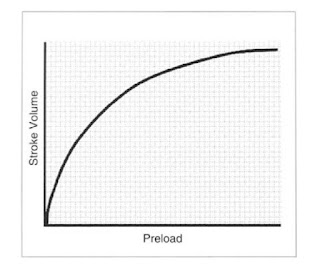
Preload represents the stretch on the muscle just prior to its contraction. Preload in the intact heart is  influenced by a number of factors that impact on ventricular filling (and hence end-diastolic stretch). These factors include:  blood volume,  venous capacitance,  ventricular compliance,  atrial function,  valvular function,    heart rate. The Frank-Starling relationship demonstrates increasing stroke volume with increasing preload. Notice that stroke volume is more sensitive to changes in preload at low values compared to high values: How do we estimate preload clinically? With the widespread use of transesophageal echocardiography (TEE), it is possible to get a reasonable estimate of chamber size and, hence, preload. In the absence of TEE, we substitute the pressure at end-diastole with the assumption that the higher the pressure, the greater the size and the greater the stretch on the contractile ele...

Oxygen delivery and consumption calculations

Oxygen delivery and consumption calculations should be utilised to evaluate and optimize gas exchange: Oxygen Delivery: DO2 = 10 x CI x CaO 2 Oxygen Consumption: VO 2  = 10 x CI x (CaO2 — CvO 2 ) Where: CaO 2  (arterial oxygen content) = (Hb x 1.36 x SaO 2 ) + (0.0031 x PaO 2 ),  and  CvO 2  (mixed venous oxygen content) = (Hb x 1.36 x SvO 2 ) + (0.0031 x PvO 2 ) CI = cardiac index HB = hemoglobin SaO 2  = arterial oxygen saturation PaO 2  = partial pressure of oxygen in arterial blood SvO 2  = venous oxygen saturation PvO 2  = partial pressure of oxygen in venous blood

How to predict Hematocrit before starting Cardiopulmonary bypass (CPB)

You should know patient's blood volume : VpB = 1000 *f*wt where f is the proportion of body weight attributable to blood volume; f = 0.08 for infants and children up to 12 years of age, f = 0.065 for older patients. For example VpB = 1000 *0.065*80 = 5200 ml. ___________________________________________________ Than you shoud calculate the volume of patient's red cells: VpRBC = VpB * HCTp (patient's hematocrit) so : VpRBC = 5200 ml * 0.35 = 1820 ml ___________________________________________________ And finally calculation of hematocrit at the beginning of CPB : HCTpm = VpRBC / (VpB + VmB) where VmB is priming volume of CPB machine: HCT pm = 1820 / (5200 + 1300) = 0.28

Dr. John H. Gibbon

Image
John Gibbon , with his pioneering experimental work at Massachusetts General Hospital in Boston in  the late 1930s, was a major contributor to development of cardio-pulmonary bypass (CPB). One of his supporter-colleagues was a researcher at Harvard, Mary “Maly” Hopkinson. They married and continued working together, mostly at the University of Pennsylvania ’s research laboratories. By 1939, they published results of total body perfusion experiments on a number of laboratory cats that survived by employing the early apparatus invented by Gibbon.     In 1953, he performed the first successful  operation in which the patient was totally supported by CPB  when he repaired an atrial septal defect in a young woman  using a pump-oxygenator. Unfortunately, his subsequent  four patients died of a variety of problems, and he became  discouraged with the method.     The Mayo Clinic, which probably had more c...