Posts

Showing posts with the label regional anesthesia

Ultrasound-Guided TAP Block: A Comprehensive Step-by-Step Guide

Image
Introduction The Transversus Abdominis Plane (TAP) block is a highly effective regional anesthesia technique providing analgesia to the anterior abdominal wall. Utilizing ultrasound guidance significantly enhances the safety and success rate of this procedure, allowing for real-time visualization of the needle, anatomical structures, and local anesthetic spread. This block is a cornerstone of multimodal analgesia in abdominal surgery.

Wisdom Teeth Removal Anesthesia

Image
  In case dentist recommends removing wisdom teeth,  conventional inferior alveolar nerve block is the most widely used method.   But v arious anesthesia methods are being perfoming.   S uccess rate is not high and it may lead to complications, such as  painfulness,  aspiration and nerve injury.   To perfom anesthesia, the location of the mandibular foramen (MF) must be determined. I t is important to find anatomical landmarks, such as the  sigmoid notch,  occlusal plane, coronoid notch, and external and internal oblique ridges.    MF is positioned at the level of or slightly below the occlusal plane and is situated approximately 3mm above the midpoint of the imaginary line running from the sigmoid notch and the inferior border of the mandible.

TOPICAL ANESTHETIC

Image
  A number of local anesthetic formulations are available for topical anesthesia , lidocaine, dibucaine, tetracaine, and benzocaine being the drugs used most commonly. In general, these preparations provide effective but relatively short durations of analgesia when applied to mucous membranes or abraded skin. Their efficacy is determined by drug form, melting point, concentration, and skin permeability. Lidocaine and tetracaine sprays are commonly used for endotracheal anesthesia before intubation or for mucosal analgesia for bronchoscopy or esophagoscopy.

Mixtures of Local Anesthetics

 Mixtures  of  local  anesthetics  for  regional  anesthesia  are sometimes used in an effort to compensate for the short duration of action of certain rapidly acting agents such as chloroprocaine and lidocaine, and the long latency of longer-acting  agents such as tetracaine and  bupivacaine. Mixtures of chloroprocaine and bupivacaine theoretically offer significant clinical  advantages because  of the rapid onset and low systemic toxicity of chloroprocaine and the long duration of action of bupivacaine; however, clinical results in studies of combinations have been mixed. The use of catheter techniques for many forms of regional anesthesia makes it  possible to begin  with a rapid-onset  local anesthetic such as lidocaine, mepivacaine, or  chloroprocaine and then follow with an infusion of either a shorter-acting or longeracting local anesthetic  thereafter. Clinicians  should be cautioned to not...

MANAGEMENT OF HIGH SPINAL BLOCK

MANAGEMENT OF HIGH SPINAL BLOCK  1. Recognition of high spinal and call for help  2. If only circulatory compromise: Correction of bradycardia and hypotension.  Lateral displacement of uterus manually, with a wedge under the patient or by tilting the theatre table. Vagolytics like Atropine 0.6mg can be useful for severe bradycardia.  For hypotension, Phenylephrine13 boluses of 50-100mcg can be given. It can also be given as an infusion 20-40ml/hr (in a concentration of 100mcg/ml or as per hospital protocol). Ephedrine in 6mg boluses can also be given if there is hypotension and bradycardia.  Metaraminol boluses of 0.5mg or as an infusion in a concentration of 0.5mg/ml.  Mephentermine14 has been used as a 3-5mg intravenous bolus or intravenous infusion of 2-5mg/min, or 25-50mg intramuscularly. Limited information is available regarding placental transfer and foetal metabolic effects, although it is a popular agent in a number of low and middle-i...

Management of total spinal block in obstetrics

Image
A high neuraxial block is a sensorimotor block that has reached a spinal segmental level higher than that required to achieve surgical anaesthesia. The terms high, total or complete block are used interchangeably. A sensory level of T3 or above can be associated with significant cardiovascular and respiratory compromise and can hence be considered a high block. Involvement of the cranial nerves signifies intracranial spread of local anaesthetic which can culminate in complete loss of consciousness and cardiorespiratory arrest.

Post spinal puncture headache.

Image
The incidence of post spinal puncture headache is approximately 1% in spinal anesthesia. It results from unintentional or intentional puncture of the dura membrane. In obstetrics in case of accidental dural puncture up to 80% of patients subsequently developing a post-dural puncture headache.

CHOOSING AN APPROPRIATE ANESTHETIC TECHNIQUE

Image
RECOMMENDATIONS ON CHOOSING AN APPROPRIATE ANESTHETIC TECHNIQUE. Choose  peripheral nerve block in situations : Surgery of the upper extremities  Surgery of the lower extremities   Surgery of the scalp, neck, and trunk  Block of selected peripheral nerves (e.g., digital nerve block): technique to anesthetize the digits to perform surgery on the fingers or toes.

Epidural analgesia and drugs affecting hemostasis 2019

Image
The current recommendations of when anticoagulants should be stopped prior to

Local Anesthetic Dosing

Image
Table 2   General recommendations for average volumes of local anesthetic for specific blocks are found in Table 1. In all cases one must never exceed  the  recommended toxic limits of local anesthetic (Table 2), which should be calculated in advance and must also take into account any addition local anesthetic dose administered to the patient by the anesthesiologist or surgeon . Local anesthetic systemic toxicity is a rare event during peripheral nerve blockade but must be assiduously avoided.

Medications for Spinal Anesthesia

Image
Drugs for Cesarean Delivery & Duration of Surgical Anesthesia:

Level Requirements for Regional Anesthesia.

Image
The anesthetic level required depends on the surgical procedure.  Dermatomal level requirements for a selection of  operations:

Local Anesthetic Toxicity, Treatment Checklist.

Image
Local Anesthetic Toxicity, Treatment Checklist keywords: Local anesthetic systemic toxicity, LAST treatment, Local anesthetic toxicity, Lipid emulsion therapy, Anesthesia complications, Treatment of LAST, Bupivacaine toxicity           Local anesthetic toxicity (LAST)  can occur because of inadvertent intravascular injection or dosing error. Intravascular injection can cause toxicity even if the anesthetic was administered within the recommended dose range.

The range of variation in the termination of the spinal cord.

Image
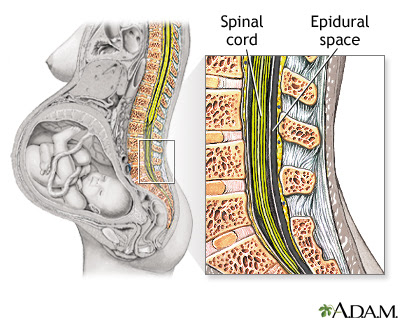
      The spinal cord terminates on average at the disc between the 1st and 2nd lumbar vertebral bodies (in the adult) . However, there is considerable variation in this level. Frequently, the cord ends opposite the body of L1 or L2, or, rarely, T12 or even L3.

Spinal Opioid Dosages for Labor and Delivery.

Image
Spinal Opioid Dosages for Labor and Delivery: A Guide for Anesthesiologists Keywords: spinal opioid dosages, labor and delivery analgesia, epidural vs spinal anesthesia, intrathecal opioids, pain management in labor Pain management during labor and delivery is a cornerstone of obstetric anesthesiology. Among the most effective techniques is the use of spinal opioid dosages , often administered via intrathecal injection as part of a combined spinal-epidural (CSE) or standalone spinal anesthesia. These methods provide rapid, targeted pain relief with minimal systemic side effects. In 2025, advancements in dosing protocols and opioid selection have refined their use, making them a go-to choice for labor analgesia. This article explores the latest recommendations for spinal opioid dosages in labor and delivery , their benefits, risks, and practical tips for anesthesiologists aiming to optimize maternal outcomes.

Motor Response of Upper Limb Nerves to Stimulation.

Image
    Peripheral Nerve Stimulation is the most common method used to identify nerves percutaneously. Pure ulnar/radial/median nerve stimulation can only be achieved at the axilla or below. Indicates motor supply of the nerve. Sensory stimulation can be  achieved with some peripheral nerve stimulators. Patient cooperation is desirable but not essential—sedation or GA is possible, but the patient should not have received neuromuscular  blocking drugs. Possible reduced potential for nerve damage, because there is no need for direct physical contact with the nerve (paresthesia). Usually comfortable for the patient.