Posts

Mixtures of Local Anesthetics

 Mixtures  of  local  anesthetics  for  regional  anesthesia  are sometimes used in an effort to compensate for the short duration of action of certain rapidly acting agents such as chloroprocaine and lidocaine, and the long latency of longer-acting  agents such as tetracaine and  bupivacaine. Mixtures of chloroprocaine and bupivacaine theoretically offer significant clinical  advantages because  of the rapid onset and low systemic toxicity of chloroprocaine and the long duration of action of bupivacaine; however, clinical results in studies of combinations have been mixed. The use of catheter techniques for many forms of regional anesthesia makes it  possible to begin  with a rapid-onset  local anesthetic such as lidocaine, mepivacaine, or  chloroprocaine and then follow with an infusion of either a shorter-acting or longeracting local anesthetic  thereafter. Clinicians  should be cautioned to not...
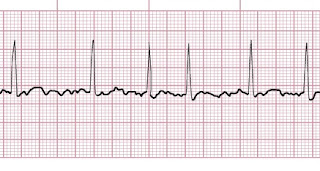
HEART RHYTHM CONTROL STRATEGY

Image
  HEART RHYTHM CONTROL STRATEGY:

CARDIOGENIC SHOCK

Image
1 Give supplemental oxygen to achieve SpO2 ≥ 90%. 2 Intubate if SpO2 not maintained or altered mental state. 3 Get a 12-lead ECG and screen for STEMI equivalents using right side and posterior leads as appropriate.

AORTIC DISSECTION

Image
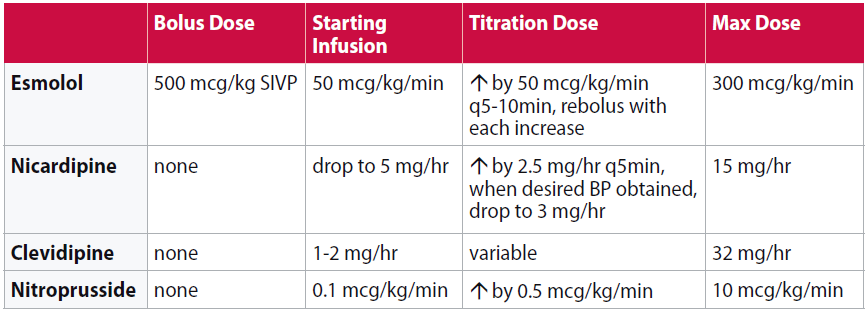
1. Establish large bore IV access and titrate FiO2 to SpO2 ≥ 90%. 2. Place right radial arterial line and use left arm for NIBP. 3. Use fentanyl and esmolol as first line therapy to control pain, keep HR < 60 and reduce SBP < 120 mmHg. 4. If additional control is needed, use the agents listed (in order of preference) in the table opposite. 5. Prepare for rapid CT angiogram but use bedside TEE or TTE as alternatives if unstable or while waiting for CT.

ANAPHYLACTIC SHOCK

Image
1. Eliminate any allergy triggers 2. Get ready for intubation as edema can progress shortly. 3. Provide oxygen flow. 4. Provide reliable intravenous access with large bore cannula. 5. Give 20-30 mL/kg crystalloid iv.

PULSE PRESSURE

Image
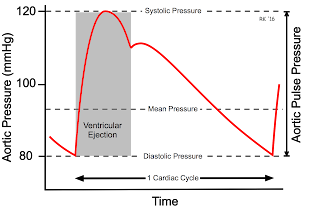
Pulse pressure mathematically   is the difference between systolic and diastolic blood  pressure .  Pulse pressure reflects the stroke volume and compliance of the arterial system.

Noncardiovascular Disorders Causing Chest Pain.

Image
  Noncardiovascular   Disorders, special Features: